
INTELLIGENT OPTICAL TECHNOLOGIES.
We passionately obsess over milliseconds, millimeters, and milliwatts.
Accelerating the kill chain
through edge computing
and low-latency sensors.
Current threats require faster responses. Drone swarms, hypersonic vehicles, and low-contrast micro-munitions close distance in milliseconds — while frame-based sensors process too much irrelevant data, RF-dependent systems can be detected and jammed, and traditional workflows struggle to keep pace with swarm-speed threats.
The military calls this sequence the dynamic targeting cycle — Find, Fix, Track, Target, Engage, Assess (F2T2EA) — colloquially known as the kill chain. Per JP 3-60 and AFDP 3-60, it applies to both deliberate and dynamic targets, and to kinetic and non-kinetic effects alike.
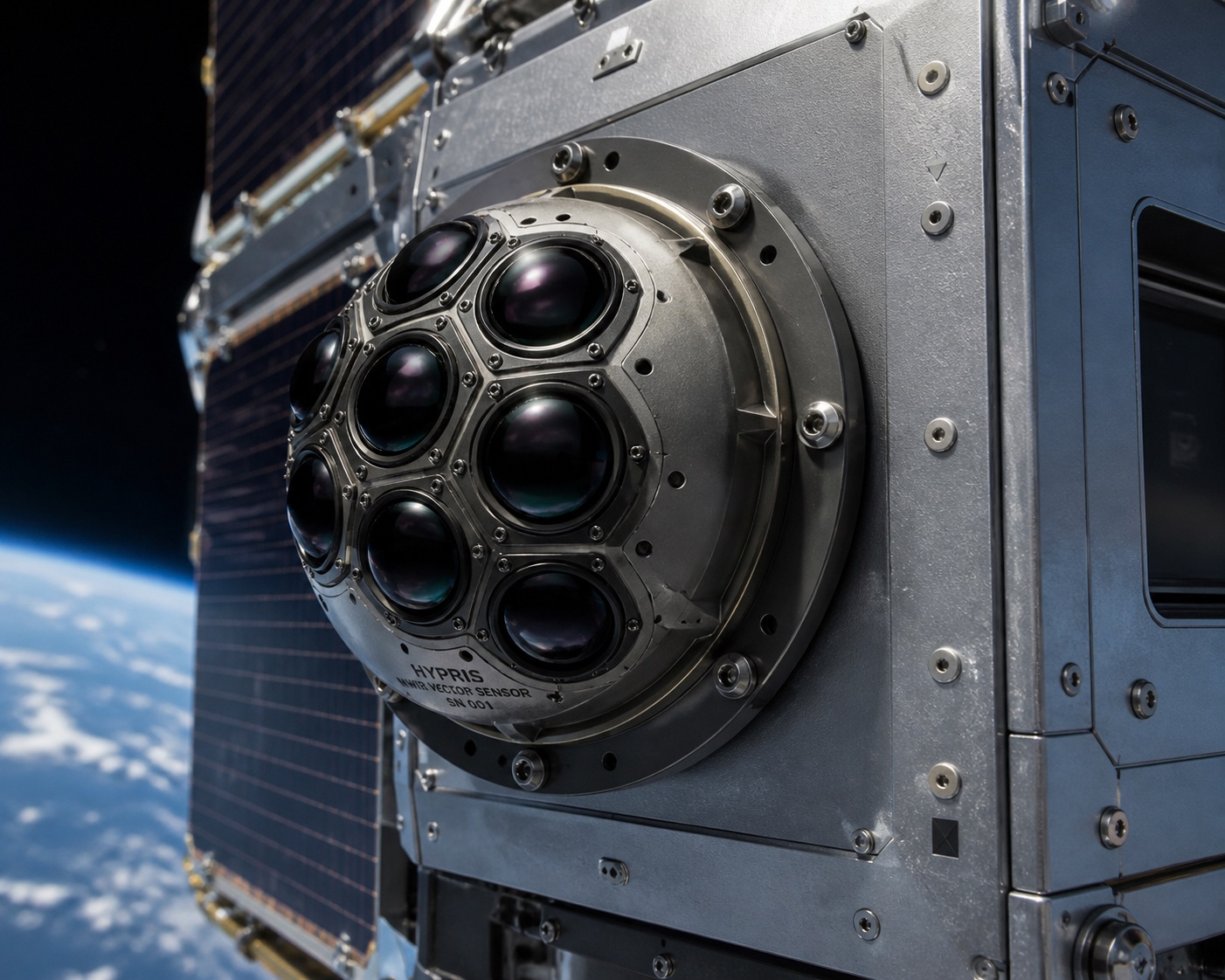
C5Prime compresses every stage of it. Our neuromorphic sensors output position, velocity, and acceleration vectors in real time — without the frame capture, processing, and pipeline delays that defeat conventional systems.
The PlayBook™
platform.





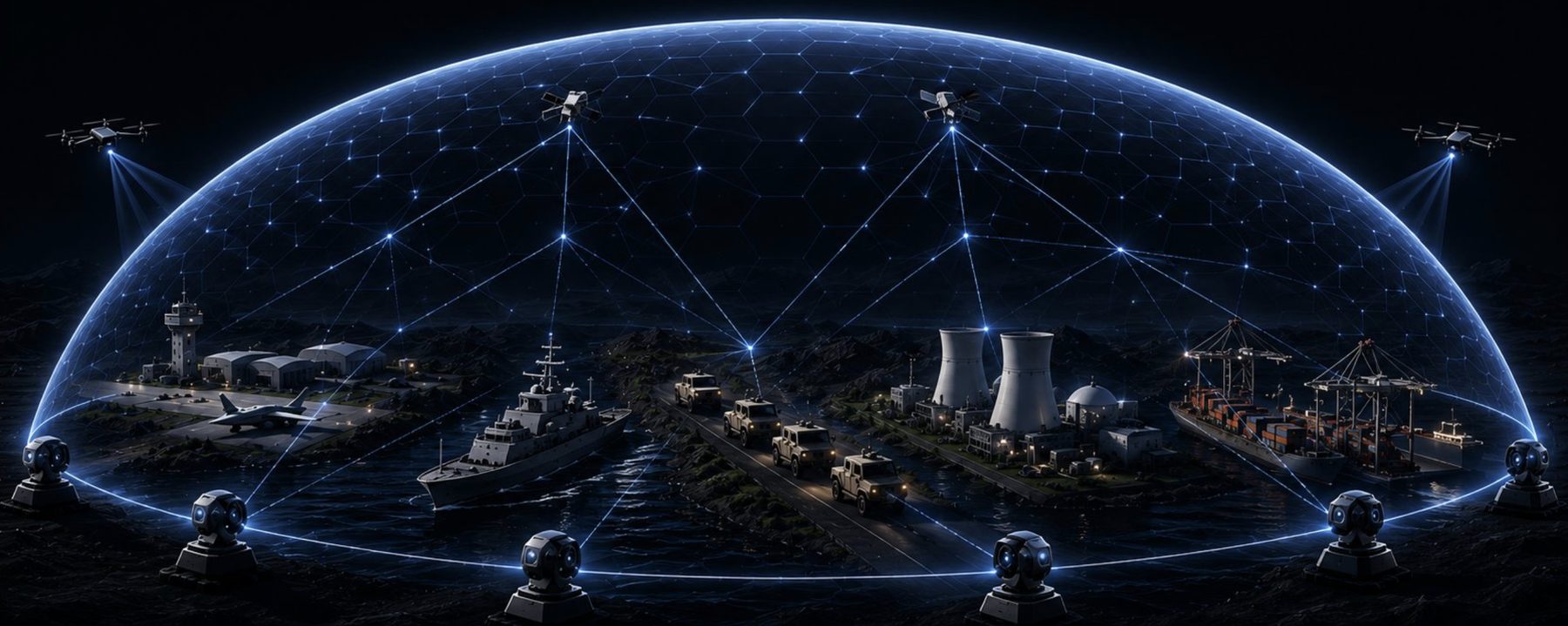
The convergence product. Integrated autonomous defense infrastructure for critical assets, bases, convoys, ports, and expeditionary operations — built on the full PlayBook™ module set.
Where C5Prime operates.
Counter-UAS &
Point Defense
The last five seconds of a drone attack are where conventional systems fail. C5Prime's ScatBack and WingBack sensors operate precisely in this window — tracking multiple fast-moving, low-contrast threats in cluttered environments with zero-lag response. Designed for the point defense problem others can't solve.
Space Situational
Awareness
Low SWaP-C hyperspectral sensing enables wide-field monitoring across GEO, MEO, and LEO orbits. Rapidly identifies debris, satellite movements, and boost-phase ballistic threats — with the power efficiency required for space-deployed sensor architectures.
Hypersonic Threat
Detection
Hypersonic vehicles and high-speed micro munitions demand detection and tracking in milliseconds — not seconds. WingBack outputs real-time position, velocity, and acceleration vectors continuously, compressing the engagement timeline to what the threat demands.
The people
behind C5Prime.
C5Prime is built by a team of engineers, scientists, and advisors with deep expertise in neuromorphic sensing, optical physics, defense systems, and machine learning. Our small, focused team executes faster than traditional contractors — from bench prototype to field demonstration.

CEO and Founder of C5Prime. A 24-year Air Force veteran who grew Air Force CyberWorx innovation funding from $2M to $100M+ and secured $75M+ in venture and military contracts as founder of Bold Talon Group.

Leads commercialization strategy for C5Prime's photonic and sensing technologies. A former U.S. Navy pilot with 20+ years closing multimillion-dollar defense and federal programs.

Colonel (Ret.), former Director of Air Force CyberWorx, leading rapid prototyping of emerging technologies into operational capability. Two decades spanning cybersecurity, AI/ML, and C2 architectures across INDOPACOM, NORAD, and SOCOM.

PhD electrical engineer with 40+ years designing autonomous systems and advanced electronics. Led autonomous UAV control architectures for the U.S. Air Force Academy and engineered a brain-computer interface enabling quadriplegic drivers to operate a racecar.

40+ years architecting RF and electro-optical systems for aerospace and defense, including flight-qualified LEO ISR payloads. Co-Founder of Lamina Systems, holding multiple patents in hyperacuity bio-inspired sensing.

CEO and Chairman of Minerva Engineering, a defensive cyber operations and incident response firm. Former U.S. Air Force GPS Navigation Engineer with 20+ years in defense technology leadership.

CEO and board director who drove 130x revenue growth at ConcealFab, earning four straight Inc. 5000 rankings. Career spans Morgan Stanley, Boston Consulting Group, and Boeing.

CEO of BurstIQ with 30+ years as a CEO/CTO across healthcare IT, cybersecurity, and SaaS. Began his career as a U.S. Air Force officer supporting C4I and cyber warfare initiatives.

Founder, President, and CEO of INVOTEC Engineering (later Hahn Automation Group US), building it into a 100+ person automated test and assembly equipment manufacturer over 30 years.
Work With C5Prime
C5Prime partners with government agencies, defense contractors, and program offices on programs requiring advanced neuromorphic sensing, optical communications, and targeting-cycle integration. We welcome inquiries from contracting officers, program managers, and technical evaluators.